High winds, heavy wet snow and sudden storms are part of life in the Grand Valley, and they take a toll on trees. A limb that seemed solid can split, a full tree can come down and hidden damage can leave a tree unstable even when it still looks upright.
When that happens, the instinct is to start cleaning up right away. Before you do, it helps to slow down and work through the situation in order, because storm-damaged trees carry real hazards.
First, keep people away from the danger
Start by making sure everyone stays clear of the damaged tree and anything it could fall on. Broken limbs can be hung up in the canopy and drop later, and a leaning trunk can shift without warning. Keep children and pets inside and away from the area until it has been assessed.
Watch for power lines
If a tree or limb is touching a power line, or has brought a line down, treat everything nearby as energized and dangerous. Do not approach, and do not attempt to move branches near lines. Contact your utility provider, since downed-line situations and trees on primary lines are handled by the utility for safety reasons.
Document the damage
Once it is safe to do so from a distance, take photos of the damage for your records. If you plan to contact your insurance company, clear photos of the tree, any affected structures and the surrounding area are helpful. Keeping a simple record before cleanup begins is always a good idea.
Do not attempt risky cutting yourself
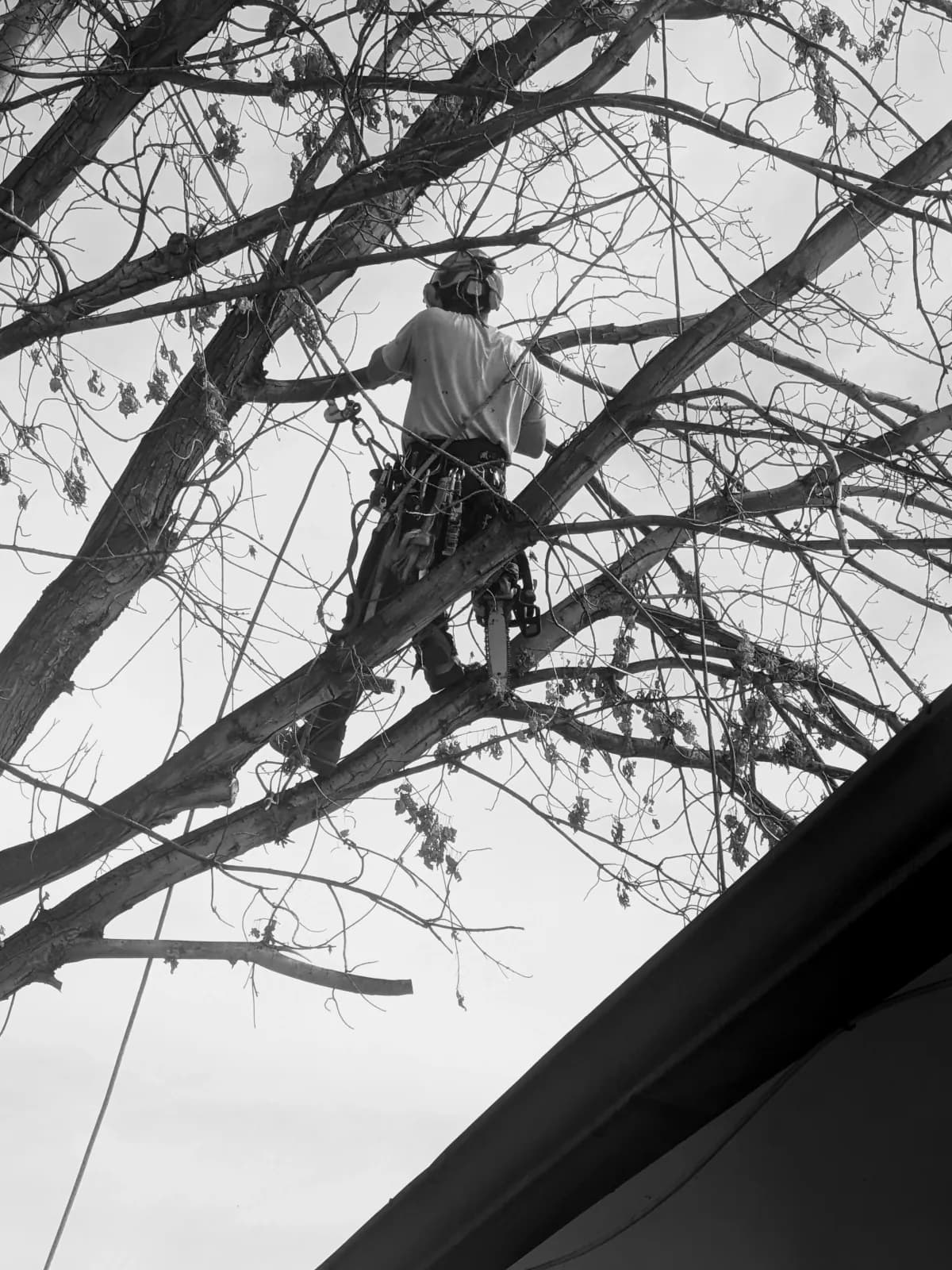
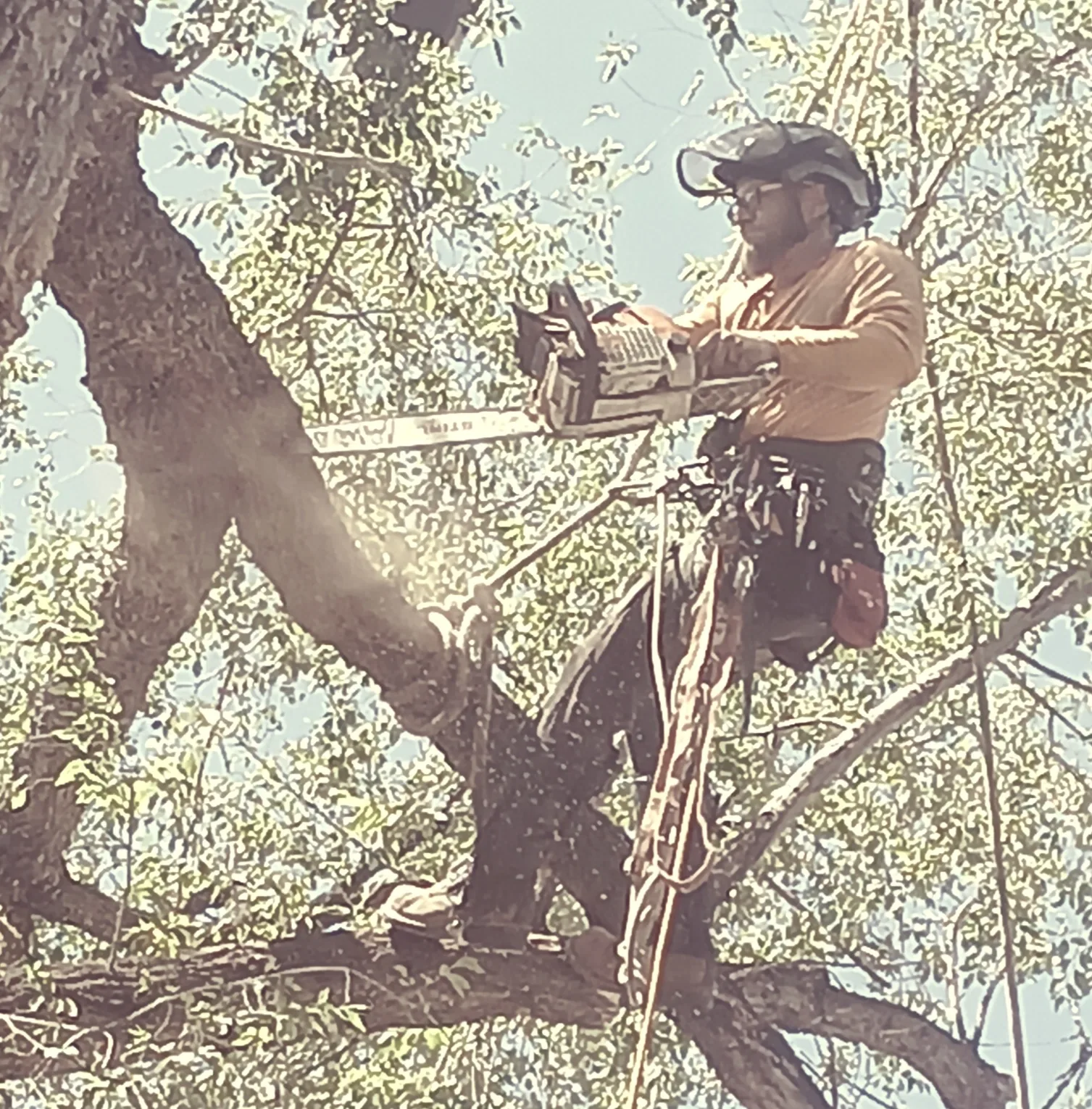
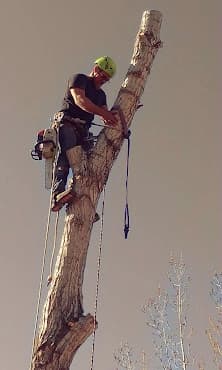
Storm-damaged trees are under tension in ways that are hard to predict. Limbs can be loaded like a spring, and a single cut can cause a violent, sudden release. This is the situation where do-it-yourself cleanup most often leads to injury. Small debris on the ground is one thing; anything overhead, hung up or under load should be left to professionals with the right equipment.
Call for emergency help when needed
If a tree is on a structure, blocking access, split or leaning toward a building, that is an emergency. We offer 24/7 emergency tree service for exactly these situations. Call and describe what you are seeing, and we will talk through what can be done to make the property safe.
What to do before help arrives
Keep everyone out of the drop zone and away from anything the tree could still hit. If a limb is hanging overhead, do not stand under it to inspect it. If the tree is near a building, close off the area if you can do so safely from a distance. The purpose is simple: avoid getting hurt while the tree is still unstable.
If the storm also damaged fencing, roofing or gutters, make note of it without climbing or stepping into unsafe areas. A quick walk around from a safe distance can help you describe the site later, but it should never take priority over getting people away from the danger.
When the tree may still be salvageable
Not every storm-damaged tree is doomed. Some can be reduced, cleaned up and monitored after the immediate hazard is addressed. A broken limb may be removed and the tree can still recover if the trunk and root system are sound. The key is to separate the immediate emergency from the longer-term decision about the tree's future.
That is where a follow-up assessment matters. Once the site is safe, the tree may need pruning, support or a removal plan. The first visit is about controlling the hazard. The second conversation is about whether the tree should stay in the landscape.
Why follow-up work matters
Storm response can solve the urgent problem without finishing every job at once. A tree that was made safe may still need stump grinding, cleanup or a second visit for removal after the broken material is gone. That is normal. It is better to remove risk in stages than to force one rushed visit to do everything.
Homeowners also benefit from thinking about the cause of the damage. If the tree failed because it was weak, crowded or poorly structured, the next step might not be the same tree work you would order after a one-off branch break. A careful follow-up helps keep the next storm from creating the same mess.