Removing a tree is one of the more demanding jobs in tree care, especially when the tree is large, dead, damaged or growing close to a house, fence or power line. Our crew is trained and equipped to bring trees down in a controlled way that protects everything around them.
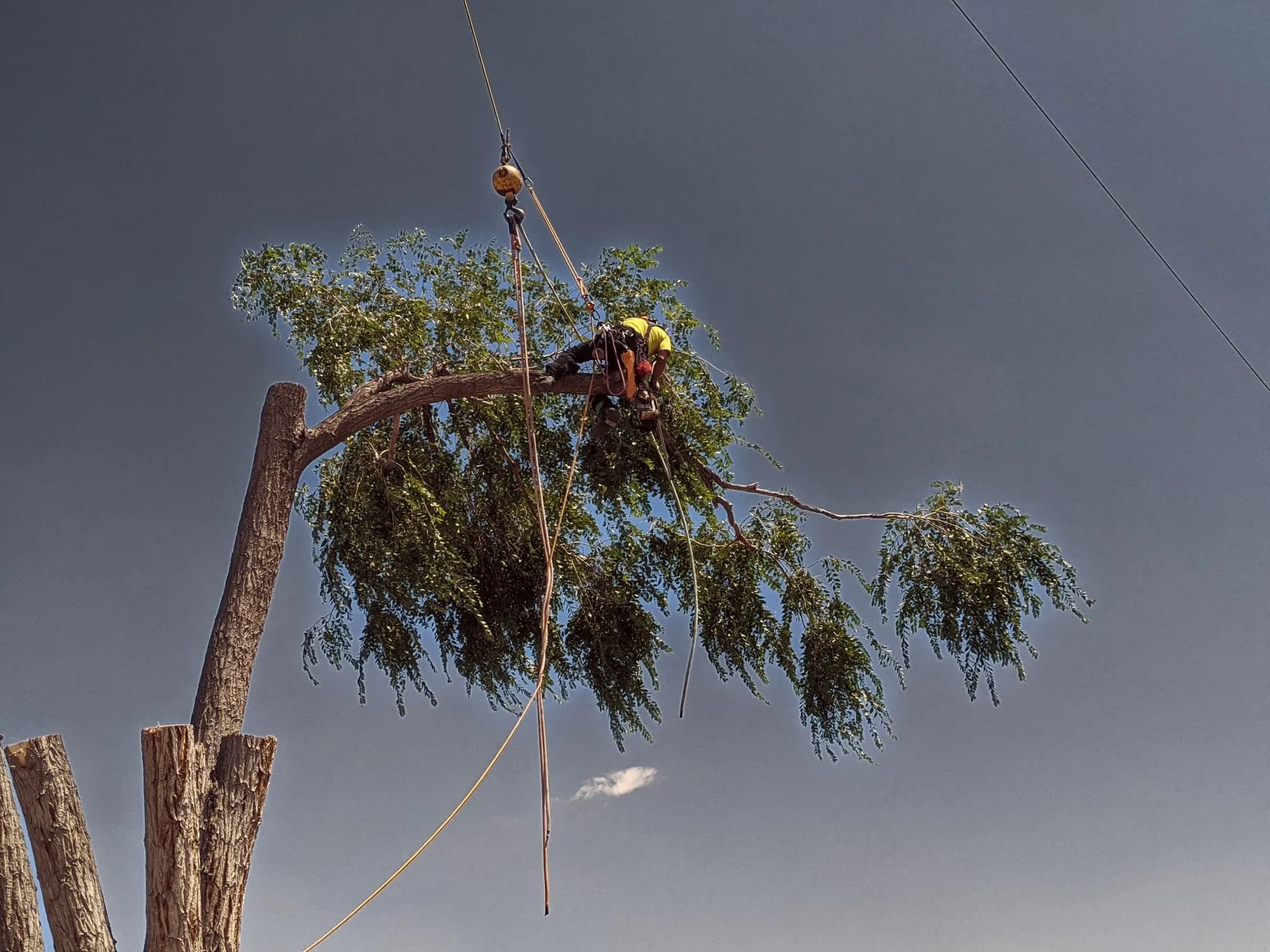
For trees with room to fall, we can fell them directly. For the more common situation, where a tree is surrounded by structures, we rig the tree down in sections, carefully lowering each piece to the ground. This technical approach is what keeps removals safe in tight Grand Valley yards.
We always start by evaluating whether removal is truly necessary. If a tree can be preserved with pruning or a support system, we will tell you. When removal is the right call, we handle it from the first cut to the final cleanup.
What to Expect
Removal is appropriate when a tree is dead, structurally failing, infected beyond recovery or growing in a place where it can no longer be managed safely. Before work begins, we look at lean, trunk defects, root issues, nearby targets and access routes so we know whether the tree can be dropped, must be dismantled in sections or should be left alone for the moment. That first look matters because the safest plan is not always the fastest one.
The work includes sectioning, rigging, lowering, debris handling and haul-away, but the exact method depends on your property. Narrow gates, steep ground, soft soil, rooflines, detached structures and ornamental plantings all affect how we set up. In some cases we need more time for rigging and ground protection, and in others a straightforward felling cut is enough. We will explain the plan so you know what to expect before the saw starts.
Tree removal is not the same as stump grinding or stump removal, and it does not solve every hazard by itself. If the root flare is the concern, a stump service may be more useful. If the tree still has value and the issue is limited to a weak limb or crown imbalance, pruning, cabling or a risk assessment may be the better fit. We work across Grand Junction and the Grand Valley, and we always provide a free estimate before scheduled removal work.
For customers with larger properties or multiple problem trees, it is often smart to think through sequencing before we arrive. A tree that is clearly failing may need to come out first, while a nearby tree with a manageable defect may be a candidate for pruning or support. That kind of planning can reduce repeat visits, help protect nearby plantings and make the work easier to stage around driveways, fences and other priorities on the property. It also gives you a clearer path from the first estimate to the final cleanup, which is especially helpful when the job includes more than one tree or a mix of removal and follow-up work.
What's Included
- Assessment of the tree and surrounding hazards
- Directional felling where space allows
- Sectional rigging for trees near structures
- Removal near fences, roofs and power line corridors
- Limb, log and debris removal
- Optional stump grinding as a follow-up
Our Process
- 1
Hazard assessment
We evaluate the tree's condition, lean, surroundings and access to choose the safest removal method.
- 2
Set up and protect
We protect nearby structures and landscaping and establish clear work zones before any cutting begins.
- 3
Controlled takedown
We fell or rig the tree down in pieces, lowering sections carefully to avoid damage.
- 4
Cleanup and haul-away
We remove limbs and logs, clean the site and can grind the stump if you would like it gone.
Why Choose Top Notch Trees
Built for difficult removals
Large, leaning and tight-access trees are exactly the kind of work we specialize in.
Property protection first
Careful rigging keeps sections controlled so your home, fence and yard stay intact.
Thorough cleanup
We leave the site clean, with debris hauled away and the area raked.
Safety-first planning
Tree removal carries real risk, so we use careful planning and controlled rigging from start to finish.
If you have a tree that needs to come down, do not wait for it to become an emergency. Contact us for a free estimate and we will assess the tree and recommend the safest way forward.